 Affiliated under Mangalayatan University, Alighar UP




Introduction
Media has become one of the most influential industries in the modern world. From television and newspapers to social media, OTT platforms, digital advertising, podcasts, filmmaking and content creation, media is now part of almost every aspect of our daily lives.
For students who are creative, curious and interested in communication, storytelling and technology, Media Studies can offer a wide range of career opportunities.
The Growing Demand for Media Professionals
India’s Media & Entertainment industry is expanding rapidly, particularly because of digital platforms and changing audience behaviour. According to the FICCI-EY Media & Entertainment report, India’s M&E sector reached approximately ₹2.78 trillion in 2025, growing 9% year-on-year. Digital media became the industry’s largest segment, crossing ₹1 trillion in revenue for the first time.
Digital advertising has also become a major growth engine. In 2025, digital advertising grew 26% to ₹947 billion and accounted for around 63% of India’s total advertising revenues.
This transformation is creating demand for professionals who understand both media fundamentals and digital technologies.
Why Choose Media Studies as a Career?
1. Multiple Career Opportunities
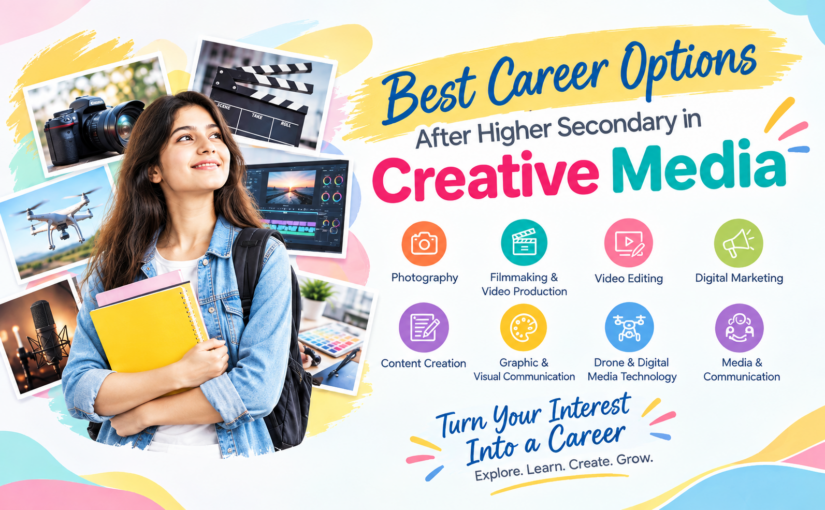
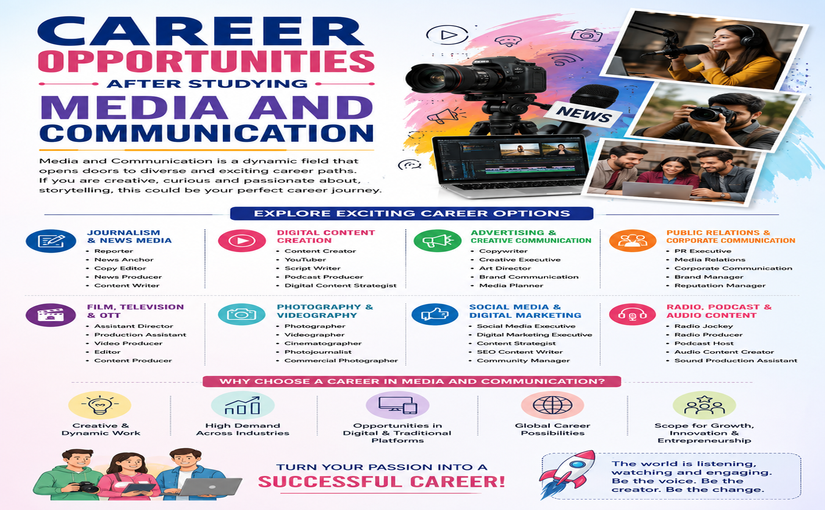
Media Studies is not limited to becoming a journalist or working in television. Students can explore careers such as:
- Content Creator
- Digital Marketing Executive
- Social Media Manager
- Video Editor
- Graphic Designer
- Photographer
- Film and Video Production Professional
- News and Media Professional
- Copywriter
- Scriptwriter
- Content Strategist
- Advertising Professional
- Public Relations Executive
- Podcast Producer
- OTT Content Professional
- YouTube and Digital Media Professional
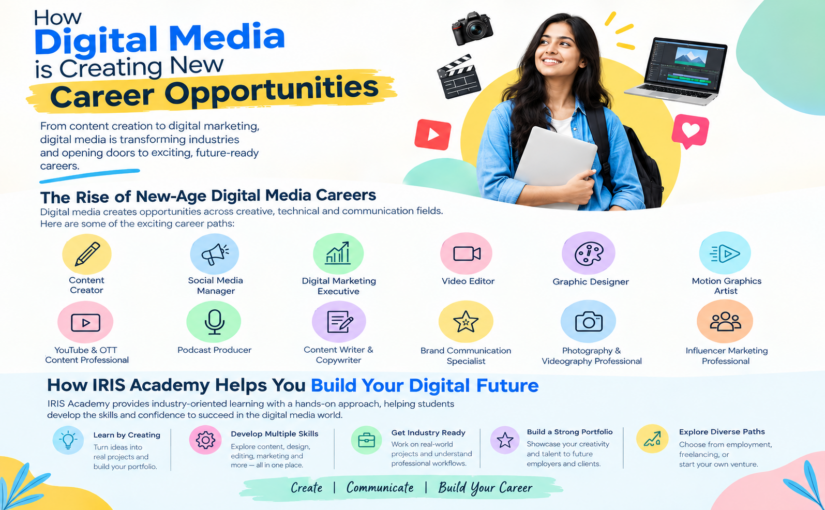
The growth of digital platforms has expanded the career possibilities far beyond traditional media.
2. Digital Media Is Changing the Industry
The media industry has moved from a traditional television-and-print model toward a much broader digital ecosystem.
Social media platforms, OTT services, websites, mobile applications, podcasts and short-form video have created new ways to produce and distribute content.
EY reported that digital media had already overtaken television as India’s largest M&E segment in 2024, and its importance increased further in 2025.
This means today’s media professionals need to understand digital storytelling, content production, audience engagement and online platforms.
3. Creativity and Technology Work Together
Modern media is no longer based only on creativity. Technology has become an important part of content production.
Professionals increasingly work with:
- Video editing software
- Graphic design tools
- Photography technology
- Social media platforms
- Digital marketing tools
- AI-powered creative tools
- Content management systems
- Analytics and audience insights
- Animation and visual effects
The integration of AI and Media Tech is also changing the way content is created and edited, making technology awareness increasingly valuable for media professionals.
4. The Creator Economy Is Growing
Social media has made it possible for individuals to become independent content creators.
A student with the right combination of storytelling, photography, video production, editing and digital marketing skills can build a personal brand, work with companies or develop their own content business.
This creates opportunities not only for traditional employment but also for freelancing, entrepreneurship and independent content creation.
What Skills Do Media Students Need?
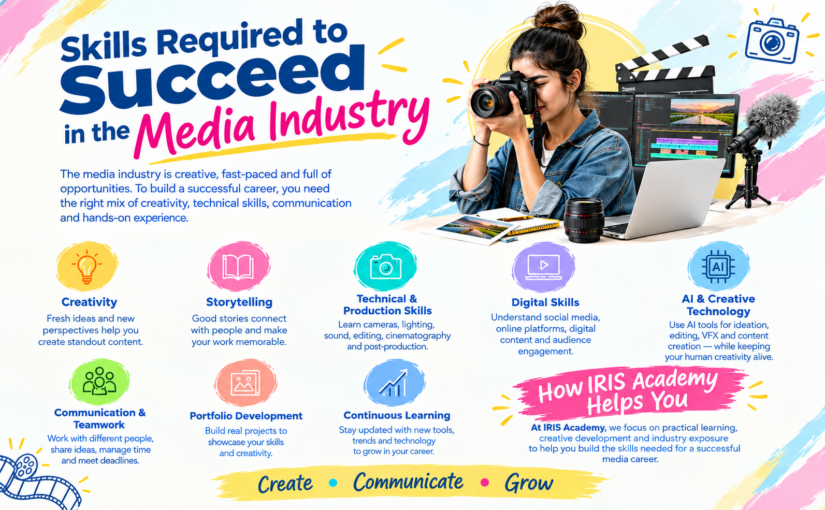
A successful media professional needs a combination of creative, technical and communication skills.
Important skills include:
Communication: The ability to communicate ideas clearly and effectively.
Storytelling: Understanding how to create interesting and engaging narratives.
Photography & Videography: Knowing how to capture professional visual content.
Editing: Understanding video, image and audio editing.
Digital Marketing: Learning how brands use digital platforms to reach audiences.
Social Media: Understanding content formats, audience behaviour and platform strategies.
Creative Technology: Using modern digital and AI tools to improve productivity and creativity.
Portfolio Development: Building real projects that demonstrate practical ability.
How Does IRIS Academy Deal With the Changing Media Industry?
At IRIS Academy, the focus can be placed on preparing students for the modern, technology-driven media environment, rather than limiting education to theoretical knowledge.
The objective is to help students develop practical skills that can be applied to real media and creative projects.
Practical Learning
Students can learn through practical assignments and creative projects involving photography, video, design, editing, digital content and communication.
This type of project-based learning helps students understand how media work is actually produced.
Digital & AI Integration
As AI and digital technologies become increasingly important in content creation, students can be introduced to modern creative workflows and AI-powered tools.
The goal is not to replace human creativity with technology, but to teach students how to combine creativity, storytelling and technology to produce better content.
Industry-Relevant Skills
IRIS Academy can focus on skills that are relevant to today’s media ecosystem, including content creation, digital media, photography, video production, editing, social media and creative technologies.
This approach helps students understand how different parts of the media industry work together.
Portfolio-Oriented Learning
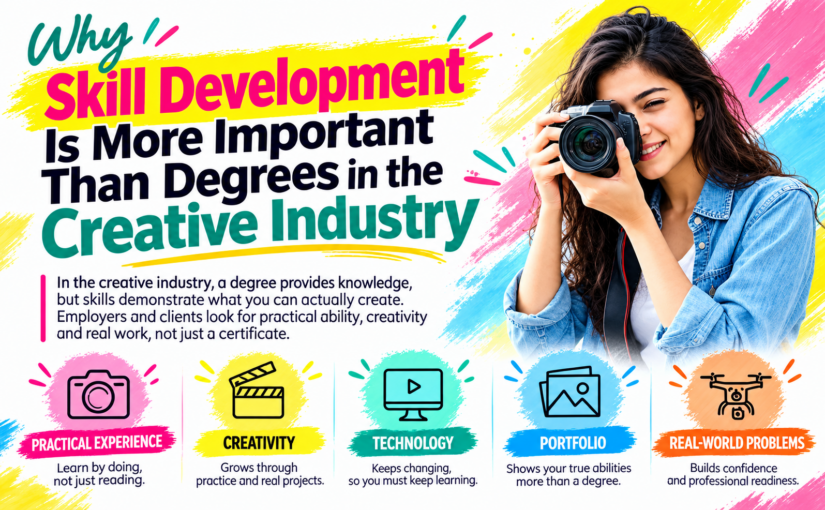
One of the most important advantages for a media student is having a strong portfolio.
Instead of focusing only on certificates, students can work on projects that demonstrate their creativity and technical abilities. A strong portfolio can help students present their skills to employers, clients or potential collaborators.
Preparing Students for Multiple Career Paths
Media is a broad industry, and every student may have different interests. Some may prefer photography, while others may be interested in filmmaking, editing, digital marketing, social media or content creation.
IRIS Academy’s approach can therefore help students explore different areas of media and identify the career path that best matches their interests and abilities.
The Future of Media Careers
The future of media is increasingly digital, visual, interactive and technology-driven.
India’s M&E sector is projected to reach around ₹3.3 trillion by 2028, with digital media, live experiences, filmed entertainment, animation and VFX among the important growth areas.
For students, this means media education can provide access to a diverse and evolving career ecosystem.
The most successful professionals will likely be those who can combine creative thinking + technical skills + communication + digital awareness.
Conclusion
Media Studies is no longer limited to newspapers, television or traditional journalism. It has evolved into a dynamic field covering digital content, social media, advertising, filmmaking, photography, OTT, AI, digital marketing and much more.
For students who enjoy creativity, communication, storytelling and technology, Media Studies can be an exciting career choice.
With practical training, modern digital tools, portfolio development and an understanding of industry trends, institutions such as IRIS Academy can help students prepare for the changing world of media and creative careers.
Learn media. Build skills. Create stories. Build your career.