 Affiliated under Mangalayatan University, Alighar UP



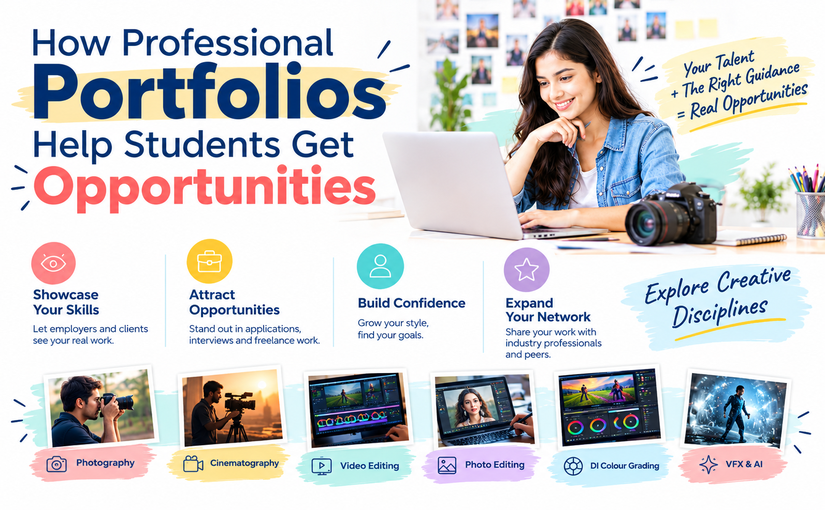
How Professional Portfolios Help Students Get Opportunities
Building Creative Skills, Showcasing Talent, and Preparing for a Professional Career with IRIS Academy Kolkata
Introduction
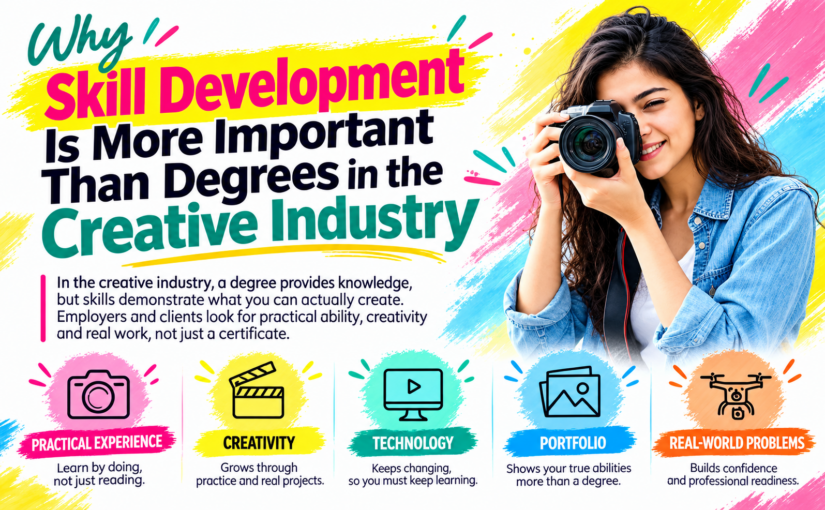
In today’s competitive media and entertainment industry, learning a skill is only the first step towards building a successful career. Whether a student wants to become a photographer, cinematographer, video editor, filmmaker, colourist, or VFX artist, the ability to showcase practical work is equally important.
This is where a professional portfolio makes a difference. A portfolio is a collection of a student’s best creative work that demonstrates their skills, creativity, technical knowledge, and professional potential. It allows employers, production houses, agencies, and clients to evaluate what a student can actually create.
At IRIS Academy Kolkata, practical learning and creative skill development are important parts of preparing students for opportunities in the media and entertainment industry.
What Is a Professional Portfolio?
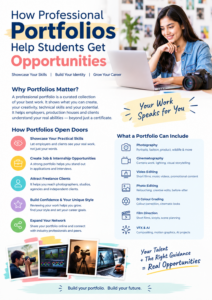
A professional portfolio is a carefully selected collection of work that represents a person’s abilities and creative identity. Unlike a certificate that confirms course completion, a portfolio provides visual evidence of what a student has learned and can produce.
Depending on the chosen specialization, a portfolio may include:
- Photography: Portraits, fashion photography, product photography, wildlife photography, and creative compositions.
- Cinematography: Camera work, lighting setups, visual storytelling, and selected video sequences.
- Video Editing: Edited short films, music videos, promotional videos, and social media content.
- Photo Editing: Retouched photographs, creative compositions, and before-and-after editing samples.
- DI Colour Grading: Colour correction, cinematic looks, and before-and-after grading comparisons.
- Film Direction: Short films, scene planning, storytelling, and selected production work.
- VFX and AI: Visual effects, compositing, motion graphics, and AI-assisted creative projects.
A well-organized portfolio helps students communicate their strengths and demonstrate their readiness for professional assignments.
Why Do Professional Portfolios Matter?
1. They Help Students Demonstrate Practical Skills
Employers and clients often want to see examples of previous work before making a decision. A portfolio allows students to demonstrate their understanding of equipment, software, lighting, composition, editing techniques, and visual storytelling.
Instead of simply saying, “I know video editing,” a student can present a completed video that demonstrates their editing ability.
2. They Create Opportunities for Internships and Jobs
A portfolio can support applications for internships, entry-level jobs, assistant positions, production assignments, and freelance projects. It gives recruiters a clearer understanding of a student’s abilities and the type of work they can contribute.
A strong portfolio does not guarantee employment, but it can help a student stand out when applying for suitable opportunities.
3. They Help Students Attract Freelance Clients
Creative professionals can use their portfolios to approach photographers, production houses, advertising agencies, wedding studios, digital marketing agencies, and independent clients.
A portfolio also helps potential clients identify a student’s specialization, creative style, and suitability for a particular assignment.
4. They Build Confidence and Professional Identity
Preparing a portfolio encourages students to review their work, identify areas for improvement, and recognize their progress. Over time, they can develop a distinct creative style and a clearer understanding of their career goals.
5. They Make Digital Networking Easier
A digital portfolio can be shared through a professional website, online gallery, video showreel, or relevant professional platform. Students can use these resources when applying for opportunities or connecting with people in the industry.
How IRIS Academy Kolkata Helps Students Build Professional Portfolios
IRIS Academy Kolkata provides professional training in photography, cinematography, video editing, photo editing, colour grading, filmmaking, film direction, VFX, AI-integrated creative skills, and related media disciplines.
The Academy’s focus on practical training and real-world projects helps students work towards developing a portfolio that reflects their chosen specialization.
1. Practical Training and Project-Based Learning
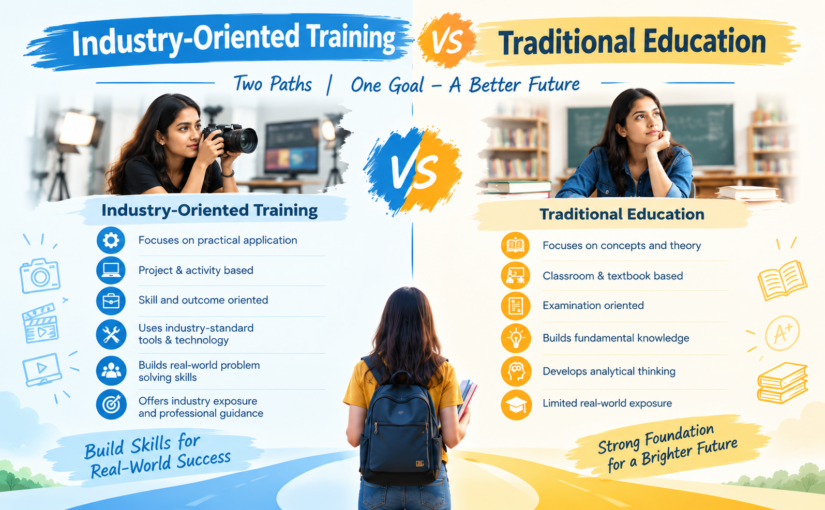
Students need opportunities to apply what they learn in class. Practical assignments allow them to develop technical skills, experiment with creative ideas, and gain experience in completing projects.
At IRIS Academy, practical learning supports students in turning theoretical knowledge into creative work that can contribute to their professional development.
2. Guidance from Experienced Faculty
Learning from experienced faculty helps students understand technical standards, creative approaches, and professional expectations. Feedback on assignments can help students improve their work, correct mistakes, and make more informed creative decisions.
This guidance can be particularly valuable when selecting and refining work for a portfolio.
3. Specialization-Based Portfolio Development
Every creative field requires a different approach to presenting work. A photographer needs a strong selection of photographs, while a video editor may benefit from a showreel containing different editing styles and projects.
IRIS Academy’s range of specialized courses allows students to develop skills relevant to their chosen field and work towards presenting those skills effectively.
4. Final Projects and Showreel Preparation
A completed project can become an important portfolio asset when it demonstrates the student’s own contribution and technical ability.
For example, a filmmaking student may develop a short film, while a video editing student may prepare a showreel featuring selected editing projects. Photography students can curate their strongest images into a focused portfolio.
The Academy’s published course syllabuses include portfolio or showreel development in relevant programmes, including video editing and filmmaking.
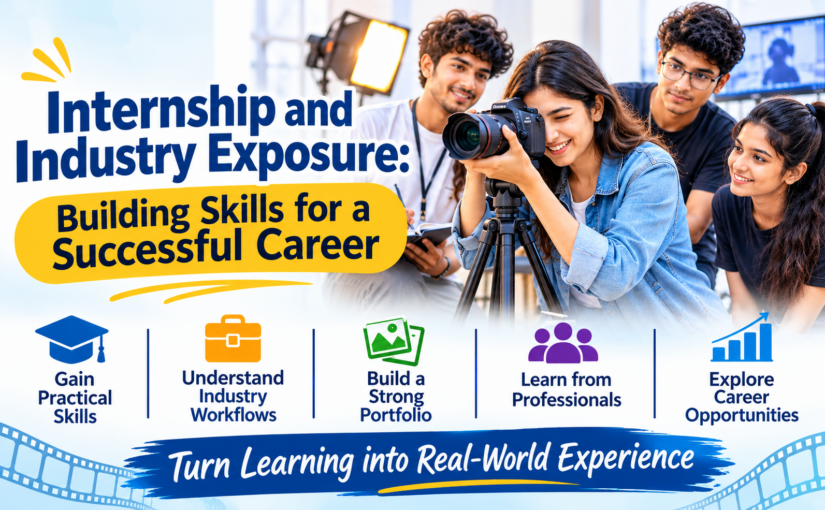
5. Industry Exposure and Career Preparation
Understanding how to present creative work professionally is an important part of career preparation. Students should learn to organize their projects, describe their contributions, and share relevant work when approaching potential employers or clients.
IRIS Academy also highlights industry exposure, practical training, internship opportunities, and placement assistance as part of its educational approach. These elements can help students prepare for the next step in their professional journey.
How Can Students Use Their Portfolios to Find Opportunities?
Building a portfolio is only the beginning. Students must also learn how to present and share it effectively.
Here are five practical steps:
Step 1: Select your best work. Choose projects that demonstrate your strongest skills rather than including every assignment you have completed.
Step 2: Organize your portfolio. Group your work by specialization, such as photography, cinematography, editing, colour grading, or filmmaking.
Step 3: Explain your contribution. Mention your role in each project, the techniques you used, and the responsibilities you handled. Always credit collaborators appropriately.
Step 4: Create a shareable digital version. Use a professional online portfolio, a curated gallery, or a concise showreel that is easy to access and review.
Step 5: Apply consistently. Share relevant work when approaching production houses, studios, agencies, employers, and potential freelance clients. Keep improving your portfolio as your skills develop.
A Portfolio Is a Career-Building Investment
In the creative industry, a portfolio is more than a collection of photographs or videos. It is a professional introduction that communicates a student’s abilities, interests, and potential.
Students who combine structured learning, practical experience, continuous improvement, and thoughtful portfolio development can put themselves in a stronger position to pursue suitable opportunities.
At IRIS Academy Kolkata, the objective is to help aspiring creative professionals develop relevant skills, gain practical experience, and prepare to showcase their work as they move towards their career goals.
Start Building Your Creative Future with IRIS Academy Kolkata
Whether your ambition is to become a photographer, cinematographer, video editor, colourist, filmmaker, or VFX artist, developing a professional portfolio can be an important step towards turning your passion into a profession.
Explore courses at IRIS Academy Kolkata and begin developing the skills needed to present your creativity with confidence.
Website: https://irisacademykolkata.com/
Location: 81 Regent Place, Tollygunge, Ranikuthi More, Kolkata – 700040
Contact: 6290711625 / 7980343473
IRIS Academy Kolkata — Learn. Create. Showcase. Grow.
Frequently Asked Questions
1. What is a professional portfolio for media students?
It is a collection of selected creative projects that demonstrates a student’s skills in photography, cinematography, editing, filmmaking, colour grading, VFX, or another media specialization.
2. Can a fresher build a professional portfolio?
Yes. Beginners can start with practical assignments, personal projects, short films, sample edits, and other original work that demonstrates their developing abilities.
3. Does a portfolio help students get jobs?
A portfolio can strengthen job and internship applications by providing evidence of practical skills. However, employment depends on factors such as the employer’s requirements, the quality of work, experience, and available opportunities.
4. How does IRIS Academy help students prepare their portfolios?
IRIS Academy offers specialized media training, practical learning, and relevant project-based coursework. Published syllabuses for selected programmes also include portfolio or showreel development.
5. Which courses can help students develop a creative portfolio at IRIS Academy?
Students can explore Photography, Cinematography, Video Editing, Photo Editing, Colour Grading, Film Studies, Film Direction, VFX and AI, and Digital Filmmaking, depending on their interests and career goals.