 Affiliated under Mangalayatan University, Alighar UP



Introduction
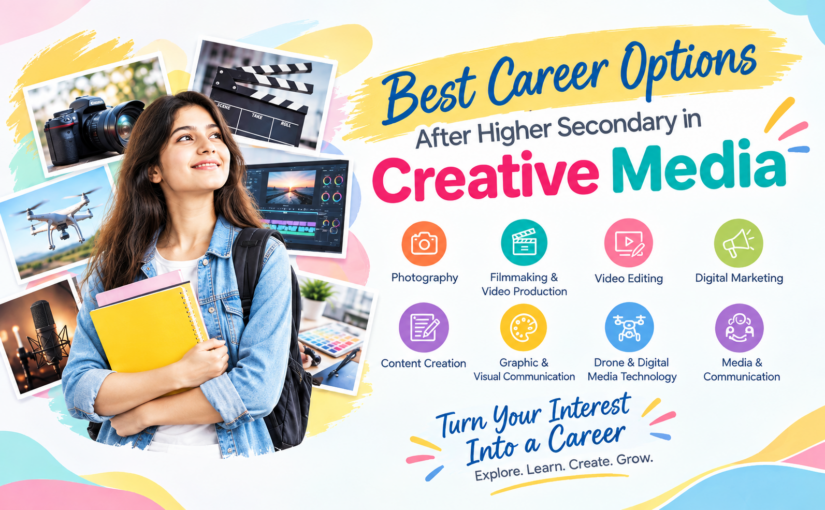
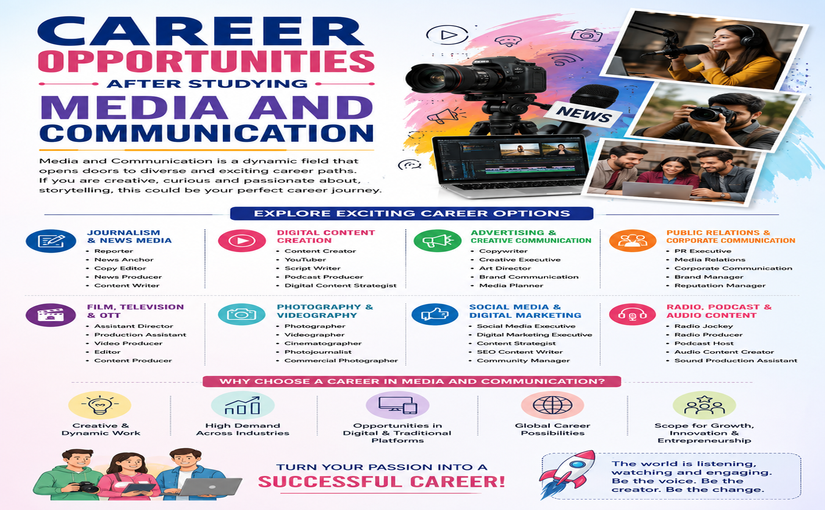
A few years ago, when students thought about a career in media, the choices seemed limited — journalism, television, radio, newspapers, or filmmaking.
Today, the picture is completely different.
A smartphone, a laptop, a camera, and an internet connection can open the door to an entire world of creative and professional opportunities. Digital media has changed not only how we consume information but also how people build careers.
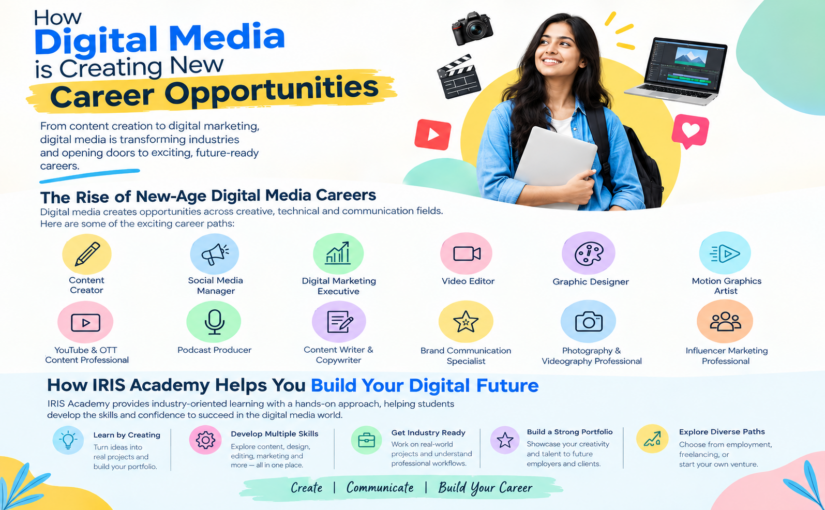
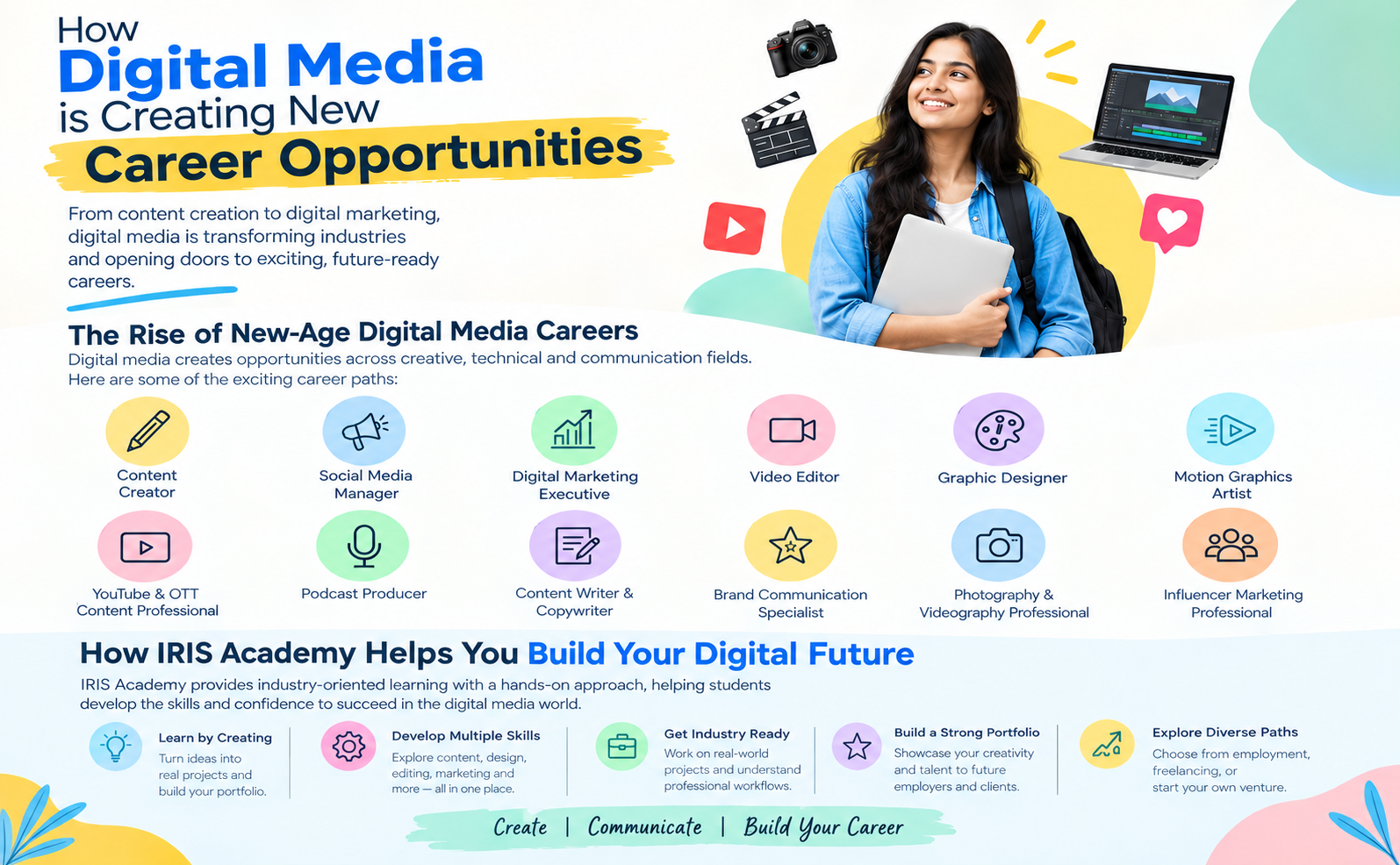
From YouTube creators and social media managers to video editors, digital marketers, content strategists, podcasters, and brand storytellers, a new generation of careers is emerging every day.
The Digital Revolution Is Changing the Job Market
Almost every organisation today needs a digital presence.
Businesses need social media content. Brands need videos. Start-ups need digital campaigns. Influencers need professional production. Educational institutions need engaging online communication. Entertainment platforms need constant streams of fresh content.
Behind all of this is a growing demand for people who know how to create, communicate and manage digital content.
This has created opportunities across several areas:
Content Creation
Content is at the heart of digital media. Blogs, reels, videos, podcasts, advertisements, social posts and branded content all require creative professionals who understand storytelling.
Video Production & Editing
Short-form videos, YouTube content, advertisements, OTT productions and corporate films have created new opportunities for videographers, editors, cinematographers and production professionals.
Digital Marketing
Companies increasingly use digital platforms to reach customers. Professionals with knowledge of social media marketing, content strategy, branding, search marketing and audience engagement are therefore becoming valuable across industries.
Graphic Design & Visual Communication
In a world where people scroll through hundreds of images and videos every day, visual communication matters. Graphic designers, motion designers and visual artists help brands communicate ideas quickly and effectively.
Social Media Management
Social media has developed into a professional field of its own. Organisations need people who can plan content, manage platforms, understand audiences and maintain consistent brand communication.
But There Is a Catch
The digital media industry changes rapidly.
The platform that is popular today may evolve tomorrow. New formats appear constantly. Artificial intelligence is changing creative workflows. Audiences are becoming more selective.
So simply knowing how to use one software program or one social media platform isn’t enough.
The professionals of tomorrow need to learn how to adapt.
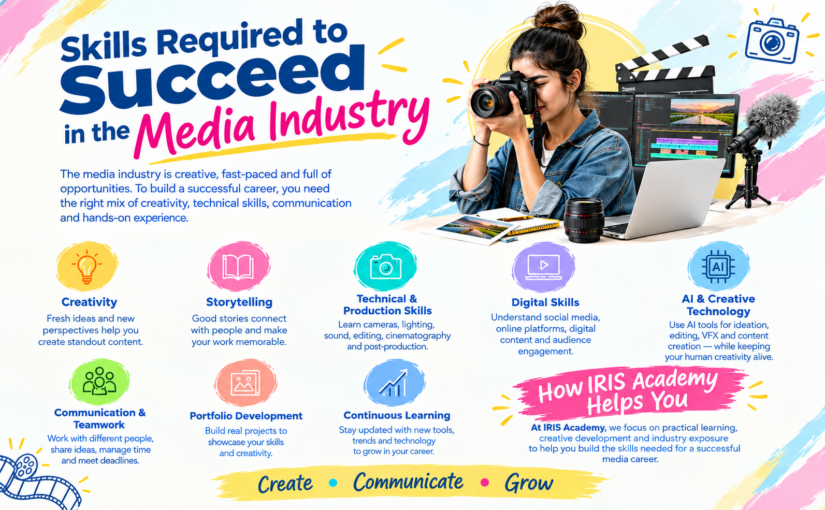
They need creativity, communication skills, technical knowledge, critical thinking and practical experience.
And this is where specialised education can make a difference.
How IRIS Academy Prepares Students for the Digital Future
At IRIS Academy, Kolkata, the objective is to help students understand the changing media landscape while developing practical and creative skills.
Learn by Creating
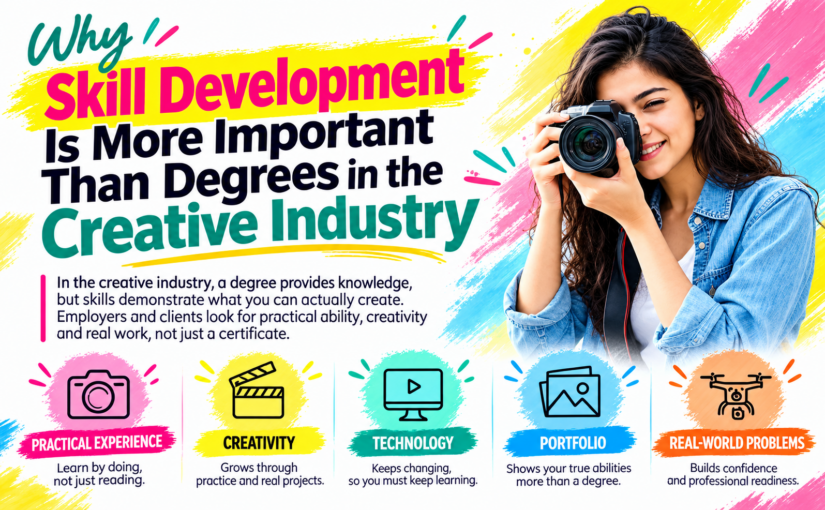
Digital media cannot be completely understood from textbooks.
Students need to create content, experiment with ideas, work with media tools and understand the process behind professional production.
A practical approach allows learners to turn concepts into actual creative work.
Develop Multiple Skills
The modern media professional is often a combination of several roles.
A person may need to understand storytelling, photography, video, editing, design, social media and communication.
IRIS Academy’s media-focused learning environment encourages students to explore these interconnected areas and understand how they work together.
Build a Portfolio
One of the biggest advantages of digital media is the ability to showcase your work.
Instead of simply telling an employer that you are creative, you can show them what you have created.
Student projects, videos, photographs, designs, campaigns and other creative work can become part of a professional portfolio that represents their skills and interests.
Understand the Industry
Education becomes more meaningful when students understand how their skills connect to real-world careers.
An industry-oriented approach can help students become familiar with professional expectations, creative briefs, teamwork, production processes and the importance of deadlines and quality.
Your Career Doesn’t Have to Follow One Traditional Path
Digital media has also changed the idea of what a career can look like.
A young professional might work for a media company, freelance for different clients, create their own content, start a creative agency or combine several of these paths.
The possibilities are increasingly diverse.
The important question is no longer simply:
“Which job should I choose?”
It can also be:
“What skills can I develop that allow me to create multiple opportunities?”
The Future Belongs to Adaptable Creators
Digital media is still evolving.
Artificial intelligence, immersive experiences, streaming platforms, short-form content, creator economies and new communication technologies will continue to influence the industry.
For students, this creates both a challenge and an opportunity.
The challenge is to keep learning.
The opportunity is to enter an industry where creativity and technology come together every day.
At IRIS Academy, students can begin developing the knowledge, practical skills and creative confidence needed to explore this changing world.
Start Creating Your Future
The next generation of media professionals will not simply consume digital content.
They will create it. Shape it. Manage it. And build careers around it.
If you are passionate about creativity, communication, technology and storytelling, digital media can offer an exciting range of possibilities.