 Affiliated under Mangalayatan University, Alighar UP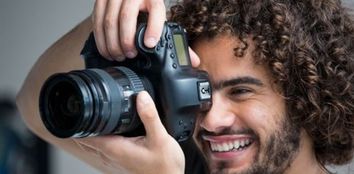



Introduction
Media and Communication is no longer limited to newspapers, television channels, or traditional journalism. The rapid growth of digital platforms, social media, OTT, advertising, content creation, podcasts, and online publishing has transformed the media industry into one of the most diverse and creative career fields.
In India, the Media & Entertainment sector reached approximately ₹2.78 trillion in 2025, growing 9% year-on-year. Digital media has become a major driver of this growth, while advertising, live experiences, filmed entertainment, animation and VFX continue to create opportunities for skilled professionals.
For students who are creative, curious, confident and interested in storytelling, communication and technology, studying Media and Communication can open the door to a wide range of professional careers.
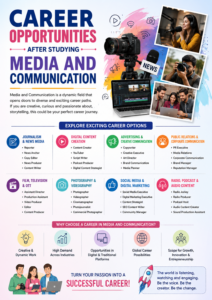
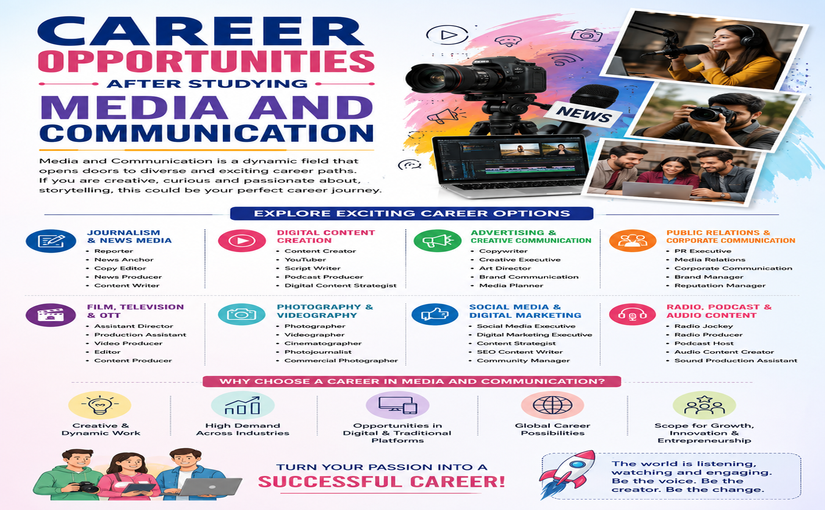
What Can You Do After Studying Media and Communication?
A Media and Communication education develops skills that can be applied across journalism, advertising, public relations, digital media, film, photography, content creation and corporate communication.
Here are some of the most popular career opportunities:
1. Journalism and News Media
Students interested in current affairs, research and storytelling can explore careers in journalism.
Possible roles include:
- Reporter
- News Writer
- Digital Journalist
- News Anchor
- Video Journalist
- Copy Editor
- News Producer
- Feature Writer
The rise of digital journalism has expanded opportunities beyond newspapers and television to websites, mobile platforms and social media.
2. Digital Content Creation
Content has become one of the most important parts of modern communication.
Media graduates can work as:
- Content Creator
- Content Writer
- Script Writer
- Video Content Producer
- Social Media Content Creator
- YouTube Creator
- Podcast Producer
- Digital Content Strategist
Government career guidance also recognises content development, content management and new-media roles as important areas within the expanding media ecosystem.
3. Advertising and Creative Communication
Advertising agencies require professionals who understand both creativity and audiences.
Career options include:
- Copywriter
- Creative Executive
- Art Director
- Visualiser
- Account Executive
- Media Planner
- Brand Communication Executive
- Creative Director
Students who combine writing, design, photography, video and strategic thinking can build strong careers in advertising and brand communication.
4. Public Relations and Corporate Communication
Every organisation needs effective communication with its customers, employees, media and stakeholders.
Media graduates can work in:
- Public Relations
- Corporate Communication
- Media Relations
- Brand Communication
- Publicity
- Corporate Content
- Reputation Management
These careers are particularly suitable for students with strong communication, interpersonal and presentation skills.
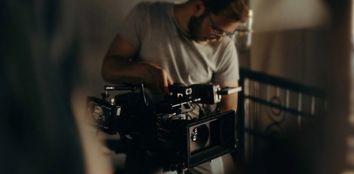
5. Film, Television and OTT
The expansion of streaming platforms and digital entertainment has created new opportunities for professionals who understand visual storytelling.
Students can explore careers such as:
- Assistant Director
- Production Assistant
- Video Producer
- Script Writer
- Production Coordinator
- Editor
- Cinematographer
- Content Producer
- Creative Producer
India’s growing content ecosystem is creating demand for professionals who can produce engaging content across multiple formats and platforms.
6. Photography and Videography
Visual storytelling is an important part of today’s media industry.
Career opportunities include:
- Professional Photographer
- Fashion Photographer
- Product Photographer
- Event Photographer
- Photojournalist
- Videographer
- Cinematographer
- Commercial Content Creator
Photography and video skills can also help students develop freelance careers and independent creative businesses.
7. Social Media and Digital Marketing
Brands today communicate directly with audiences through Instagram, YouTube, Facebook, LinkedIn and other digital platforms.
This has created careers such as:
- Social Media Executive
- Social Media Manager
- Digital Marketing Executive
- Content Strategist
- SEO Content Writer
- Influencer Marketing Executive
- Digital Campaign Executive
- Community Manager
Digital advertising is particularly significant in India’s media economy. EY reported that digital advertising grew strongly in 2025 and accounted for a substantial share of India’s advertising revenues.
8. Radio, Podcasting and Audio Content
Audio media continues to evolve through FM radio, podcasts, streaming platforms and digital audio.
Students can consider careers as:
- Radio Jockey
- Radio Producer
- Podcast Host
- Podcast Producer
- Script Writer
- Audio Content Creator
- Sound Production Assistant
9. Animation, VFX and Emerging Media
Technology is creating new possibilities in visual storytelling. Students with an interest in technology and creativity can explore animation, VFX, motion graphics and other digital production fields.
The Indian media industry is also seeing continued growth in animation and VFX, creating opportunities for trained creative and technical professionals.
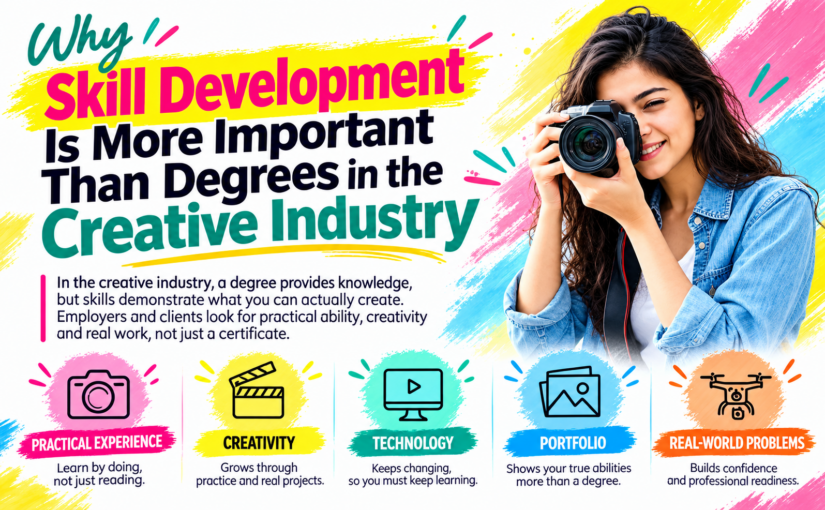
Why Practical Skills Matter
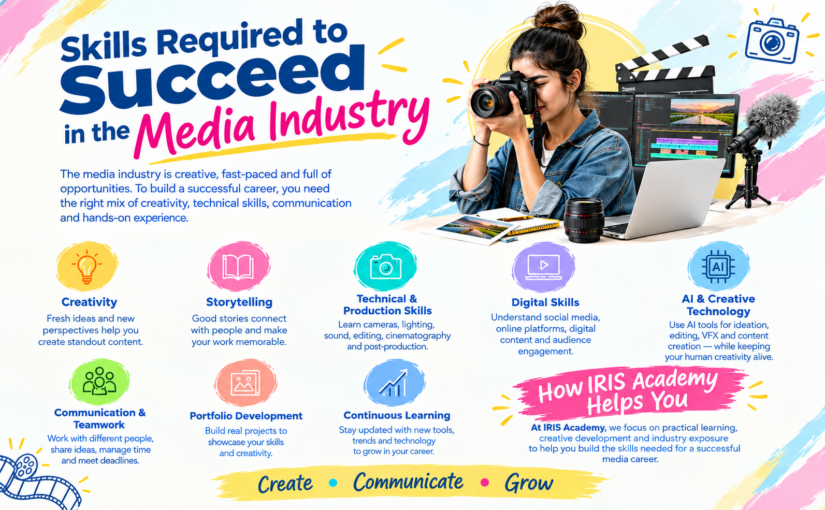
A Media and Communication qualification provides a foundation, but today’s employers increasingly look for practical skills and demonstrable work.
The Indian Institute of Mass Communication, for example, describes its Digital Media programme as practical and output-oriented, with exposure to digital tools and applications across journalism, advertising, PR and corporate communication.
Students should therefore develop skills such as:
- Storytelling
- Writing and scripting
- Photography
- Videography
- Video editing
- Graphic design
- Digital content creation
- Social media management
- Presentation and communication
- Creative thinking
- Research
- AI-assisted creative workflows
Most importantly, students should build a portfolio that demonstrates what they can actually create.
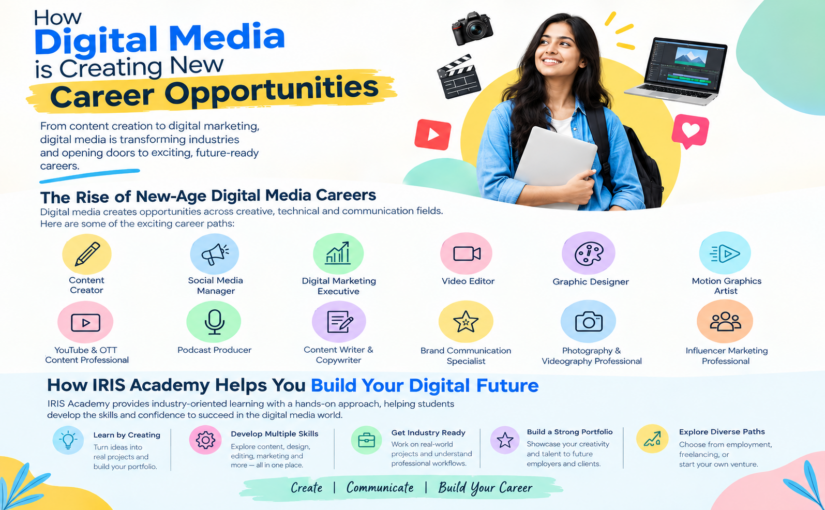
How IRIS Academy Deals With Career Preparation
At IRIS Academy, the focus is not simply on teaching students about media—it is about helping students develop the skills, confidence and creative mindset required to work in the modern media industry.
The approach can be built around four important areas:
1. Learning by Doing
Media is a practical profession. Students need opportunities to create, shoot, edit, design, write and present.
IRIS Academy focuses on practical learning so that students can move beyond classroom theory and gain experience with real creative workflows.
Students can work on projects involving:
- Photography
- Video production
- Editing
- Content creation
- Digital media
- Storytelling
- Creative communication
- Social media content
2. Industry-Oriented Skills
The media industry is changing rapidly. Traditional media skills alone are no longer enough.
IRIS Academy encourages students to understand the complete creative process—from developing an idea and creating content to editing, publishing and communicating it to an audience.
This helps students understand how different media roles connect with one another.
3. Portfolio Development
One of the most important things a media student can have is a strong portfolio.
Instead of simply saying “I know photography” or “I can edit videos,” students should be able to show their work.
A portfolio can include:
- Photography projects
- Short films
- Edited videos
- Reels
- Posters
- Social media campaigns
- Scripts
- Advertisements
- Creative projects
- Digital content
A strong portfolio gives students something tangible to present during internships, interviews, freelance opportunities and client meetings.
4. Combining Creativity With Technology
Modern media professionals are increasingly working with digital tools and AI-assisted technologies.
The future media professional is not only a photographer, editor, writer or designer—they can become a multi-skilled creative professional who understands how different technologies work together.
IRIS Academy can help students explore modern creative workflows, including digital production and AI-powered creative tools, while maintaining the importance of human creativity, storytelling and originality.
Build Your Career Around Your Creative Strength
One of the biggest advantages of Media and Communication is the variety of career paths available.
A student who enjoys writing may choose journalism or copywriting.
Someone who loves cameras may pursue photography, cinematography or videography.
A student interested in social media may explore digital marketing and content creation.
Someone with strong communication skills may choose public relations or corporate communication.
A creative student interested in technology may explore editing, motion graphics, animation, VFX or AI-powered content production.
There is no single definition of a successful media professional.
The Future Belongs to Multi-Skilled Creators
The media industry is becoming increasingly digital, visual and technology-driven. India’s Media & Entertainment sector is projected to continue growing, with digital media, advertising, live experiences and content-led businesses contributing significantly to the expansion.
This means students should not prepare for only one job title. They should develop a combination of creative, technical and communication skills.
For example, a photographer who understands video, editing, social media and AI tools can offer more value than someone with only one technical skill.
Similarly, a video editor who understands storytelling, content strategy and digital platforms can explore a wider range of opportunities.
Start Your Media Career With IRIS Academy
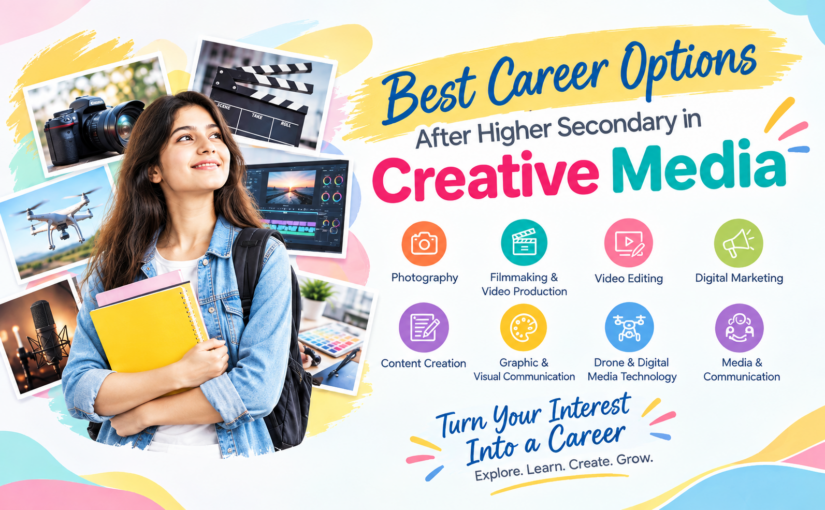
A career in Media and Communication can lead to journalism, advertising, public relations, photography, filmmaking, digital marketing, content creation, social media, OTT, corporate communication and many other creative professions.
The key is to combine education + practical experience + technology + creativity + portfolio development.
At IRIS Academy, students can develop the practical and creative skills needed to understand this constantly evolving industry and prepare themselves for opportunities across traditional and digital media.
If you are passionate about storytelling, creativity, photography, filmmaking, communication or digital content, Media and Communication can be the beginning of an exciting professional journey.