 Affiliated under Mangalayatan University, Alighar UP




Introduction
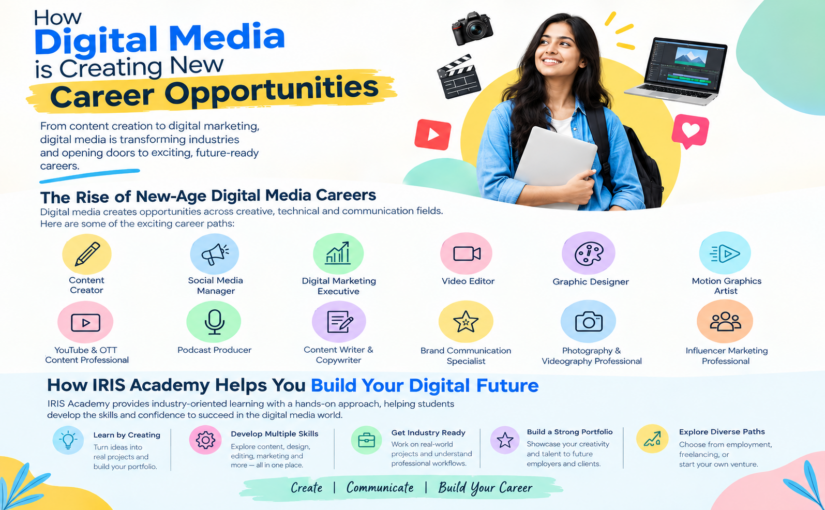
In today’s digital world, media is everywhere. From social media and YouTube to films, advertising, OTT platforms, news portals and digital marketing, communication has become an essential part of almost every industry.
This rapid growth has created exciting career opportunities for students who study Media and Communication. It is no longer a field limited to journalism or television. Today, students can build careers in content creation, filmmaking, photography, video editing, advertising, digital marketing, public relations, social media and many other creative fields.
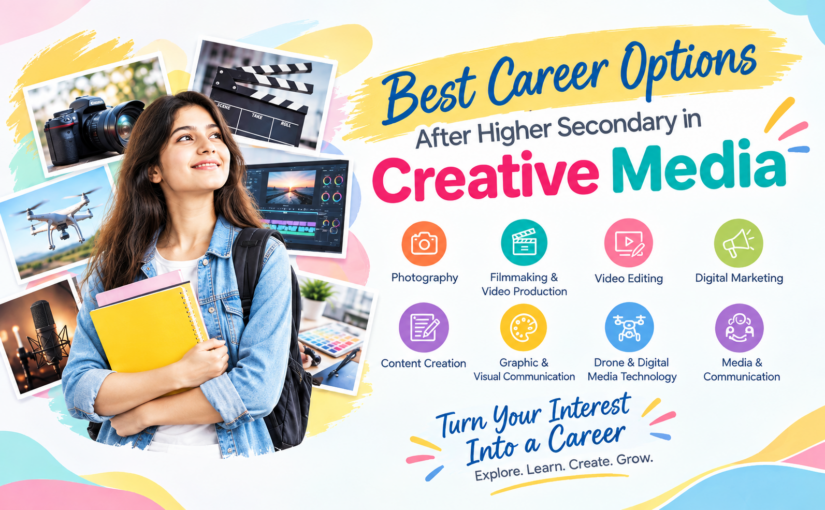
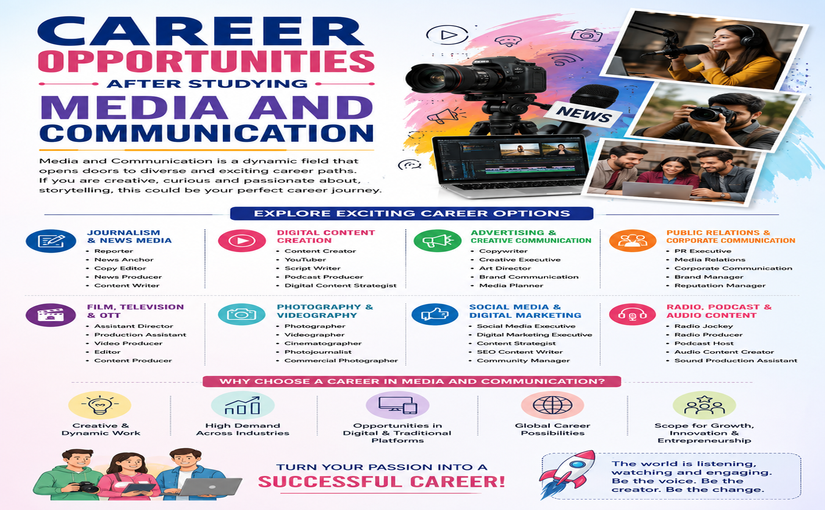
What Can You Do After Studying Media and Communication?
A Media and Communication education can open the door to several career paths.
1. Digital Content Creator
Brands and organisations need engaging content for Instagram, YouTube, websites and other digital platforms. Students can work as content creators, creative producers or independent creators.
2. Video Editor
Video has become one of the most powerful forms of communication. Skilled video editors are required for films, advertisements, YouTube channels, social media content, corporate videos and OTT productions.
3. Photographer
Photography skills can lead to opportunities in fashion, advertising, events, journalism, product photography, commercial photography and digital content production.
4. Cinematographer
Students interested in filmmaking can explore cinematography and visual storytelling. Cinematographers work on films, advertisements, music videos, web content and other productions.
5. Social Media Professional
Businesses increasingly depend on social media to communicate with customers. Social media executives and managers create content strategies, manage campaigns and engage with audiences.
6. Advertising and Creative Communication
Advertising agencies require creative professionals who can develop ideas, campaigns, scripts, visuals and digital content. Media students can build careers as copywriters, creative executives, content strategists and creative producers.
7. Journalism and Digital Media
Traditional journalism has expanded into digital platforms. Students can work as reporters, digital journalists, researchers, writers, presenters and multimedia content producers.
8. Film and Production
Students interested in cinema can explore direction, production, editing, cinematography, scriptwriting, sound and post-production.
9. AI-Powered Content Creation
Artificial Intelligence is transforming the creative industry. AI tools are now being used for image generation, video creation, editing, writing, VFX and creative workflows.
Learning how to combine human creativity with AI technology can give students an additional advantage in the evolving media industry.
How IRIS Academy Prepares Students for These Careers
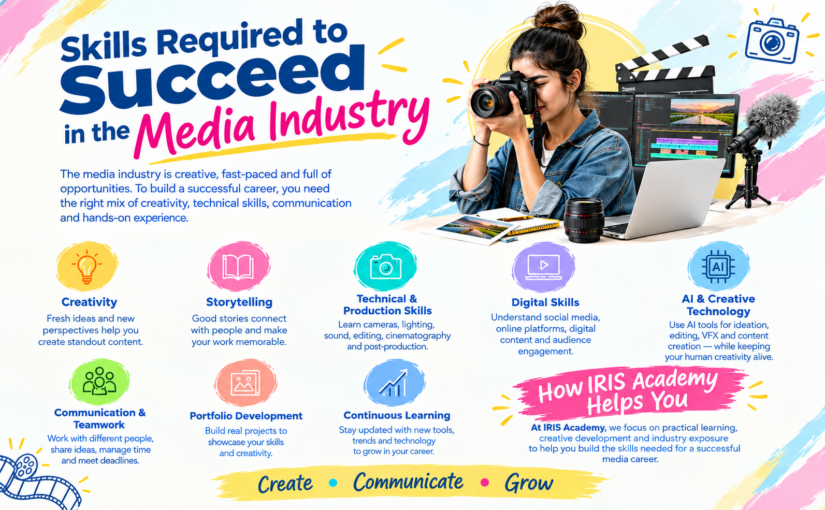
At IRIS Academy, the focus is not only on learning media theory but also on developing practical and industry-relevant creative skills.
The academy brings together Media Studies, Film Studies, Photography, Cinematography, Video Editing, Photo Editing, Color Grading, VFX and AI-powered creative workflows.
Practical Learning
Students get opportunities to understand how media projects are planned, produced and edited. Practical learning helps students gain confidence in handling real creative projects.
Industry-Relevant Skills
The media industry changes rapidly. Therefore, students need to understand both traditional creative techniques and modern digital tools.
IRIS Academy focuses on developing skills that can be applied to today’s media and entertainment environment.
Photography and Cinematography
Students interested in visual storytelling can develop their knowledge of photography and cinematography, helping them understand composition, lighting, camera techniques and visual storytelling.
Video and Photo Editing
Editing is an essential part of modern media production. Students can develop skills in editing, post-production, color correction and creative visual enhancement.
VFX and AI
The combination of VFX and Artificial Intelligence is creating new possibilities for filmmakers and content creators. Learning these emerging technologies can help students understand new creative workflows and expand their career options.
Building a Professional Portfolio
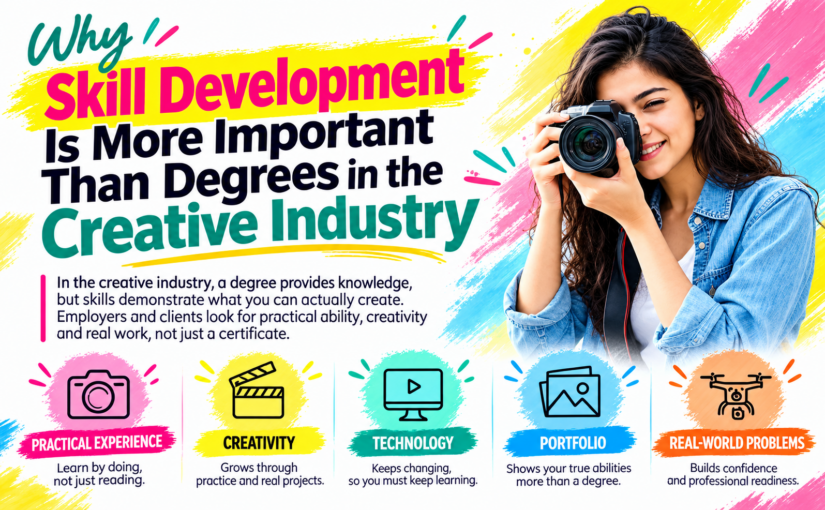
One of the most important steps toward a creative career is building a strong portfolio.
Instead of only collecting certificates, students should create work that demonstrates their actual abilities—photographs, videos, edited projects, short films, social media content, advertisements or other creative productions.
IRIS Academy’s practical approach helps students work toward developing the skills and creative output needed to build their professional identity.
The Future of Media Careers
The future of Media and Communication is becoming increasingly digital, visual and technology-driven.
A successful media professional will need more than just communication skills. They will need creativity, technical knowledge, storytelling ability, adaptability and an understanding of emerging technologies such as AI.
This makes Media and Communication an exciting option for students who want to work in creative and technology-driven industries.
Choose Skills. Build Creativity. Create Your Future.
Studying Media and Communication can be the beginning of a career in journalism, filmmaking, photography, advertising, digital content, social media, editing, VFX or AI-powered creative production.
IRIS Academy aims to help students transform their creative interests into practical skills by combining media education, hands-on learning and emerging creative technologies.
For students looking toward a future in the media, entertainment, advertising and digital content industries, developing the right skills today can create opportunities for tomorrow.