 Affiliated under Mangalayatan University, Alighar UP



Introduction
Video Editing – One of the Fastest Growing Creative Careers
In today’s digital-first world, video has become the most powerful form of communication. From YouTube videos and OTT platforms to films, television, advertisements, social media, and corporate marketing, every industry needs skilled video editors. As a result, video editing has evolved into one of the most in-demand creative careers with excellent earning potential and long-term growth.
Whether you dream of working in the film industry, editing viral content for creators, or becoming a freelance editor for clients worldwide, learning professional video editing can open countless career opportunities.
What Does a Video Editor Do?
A video editor transforms raw footage into engaging visual stories. Their responsibilities include:
- Organizing and managing video footage
- Cutting and arranging clips
- Synchronizing audio and video
- Adding music, sound effects, and voiceovers
- Applying transitions and visual effects
- Performing color correction and basic color grading
- Creating titles, captions, and motion graphics
- Exporting videos for different platforms such as YouTube, Instagram, television, and OTT services
A professional editor combines technical expertise with creativity to deliver compelling visual content.
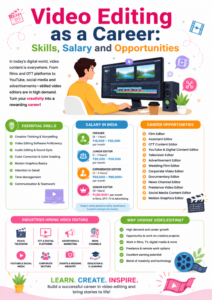
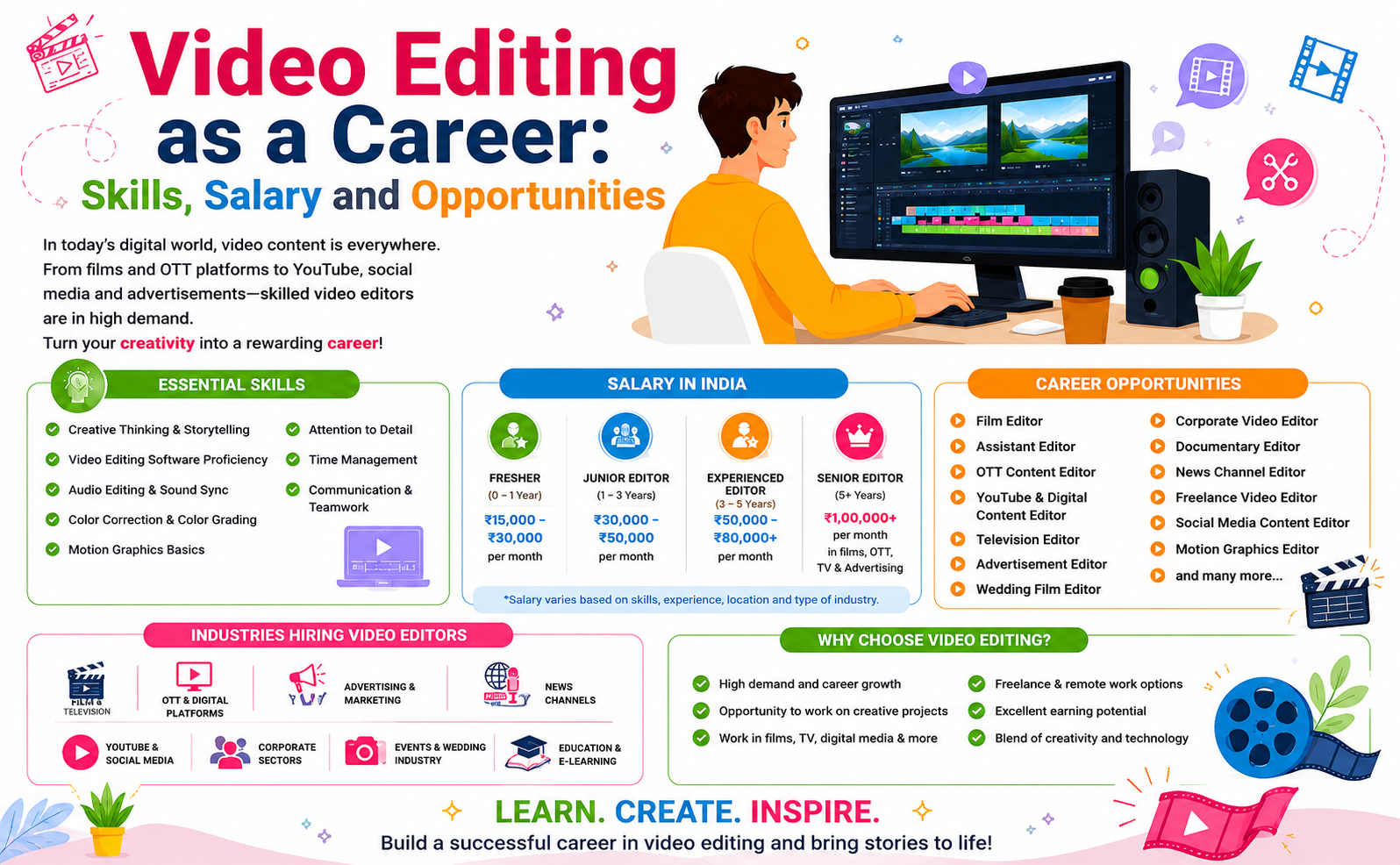
Essential Skills Required for a Successful Video Editing Career
A successful video editor needs a balance of creative thinking and technical knowledge.
Key skills include:
- Storytelling and visual communication
- Creative decision-making
- Strong understanding of editing rhythm and pacing
- Audio editing fundamentals
- Color correction and grading
- Motion graphics basics
- Knowledge of industry-standard editing software
- Time management and project organization
- Team collaboration and communication
- Problem-solving under deadlines
Continuous learning is also essential, as editing techniques and software continue to evolve.
Career Opportunities After Learning Video Editing
The demand for skilled editors continues to grow across multiple industries.
Career options include:
- Film Editor
- Assistant Editor
- YouTube Video Editor
- OTT Content Editor
- Television Editor
- Advertisement Editor
- Wedding Film Editor
- Documentary Editor
- Corporate Video Editor
- Social Media Content Editor
- News Channel Editor
- Freelance Video Editor
- Motion Graphics Editor
- Digital Marketing Video Editor
- Production House Editor
With experience, editors can become post-production supervisors, creative directors, or establish their own editing studios.
Salary of a Video Editor in India
Salary depends on skills, experience, location, and specialization.
Typical salary ranges are:
- Beginner (0–1 year): ₹15,000–₹30,000 per month
- Junior Editor (1–3 years): ₹30,000–₹50,000 per month
- Experienced Editor (3–5 years): ₹50,000–₹80,000+ per month
- Senior Editors: ₹1 lakh or more per month on major film, OTT, television, or advertising projects
Freelance editors often earn on a per-project basis and can work with clients across India and internationally, increasing their income potential.
Why Practical Training Matters More Than Theory
Video editing is a practical skill. Watching tutorials alone cannot replace hands-on experience.
Professional training helps students:
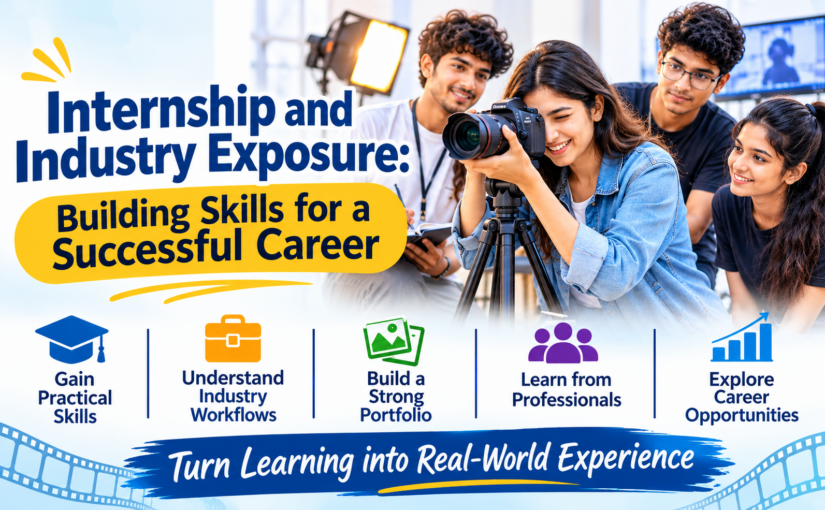
- Work on real editing projects
- Understand professional workflows
- Build speed and efficiency
- Learn industry standards
- Create a strong portfolio
- Develop confidence with editing software
- Prepare for interviews and freelance opportunities
This practical exposure gives students a significant advantage when entering the job market.
How IRIS Academy Prepares Students for a Career in Video Editing
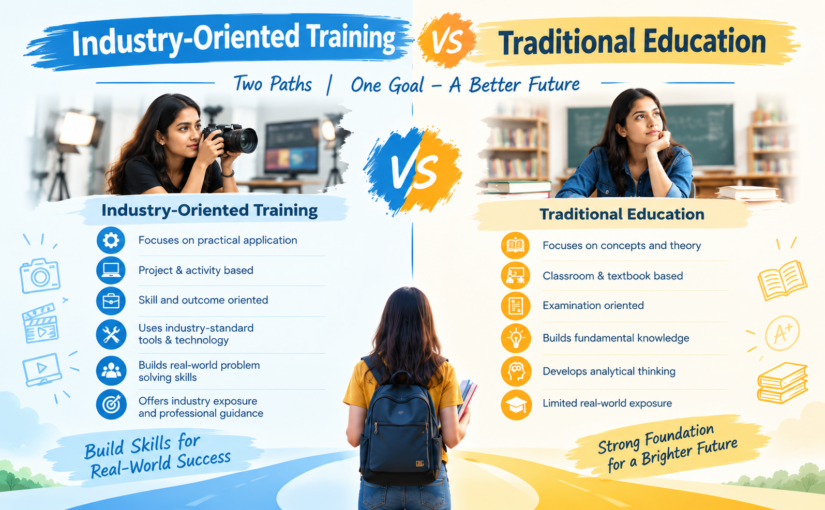
At IRIS Academy, students learn video editing through an industry-oriented approach that combines creativity with practical production experience.
The training focuses on helping students become job-ready by working on real-world projects rather than only studying theoretical concepts.
Industry-Focused Curriculum
The course is designed around current industry practices used in filmmaking, digital media, advertising, television, and OTT content production.
Students learn:
- Professional editing workflow
- Timeline management
- Audio synchronization
- Multi-camera editing
- Color correction
- Basic color grading
- Motion graphics fundamentals
- Exporting videos for multiple platforms
Hands-On Project Experience
Students gain practical experience by editing:
- Short films
- Music videos
- Documentary projects
- Advertisements
- Social media content
- Corporate videos
- Promotional films
- Digital campaigns
Working on diverse projects helps students develop confidence and versatility.
Learn from Industry Professionals
IRIS Academy provides guidance from experienced faculty members with backgrounds in filmmaking, post-production, advertising, photography, and digital content creation. Students gain valuable insights into current industry workflows and professional expectations.
Portfolio Development
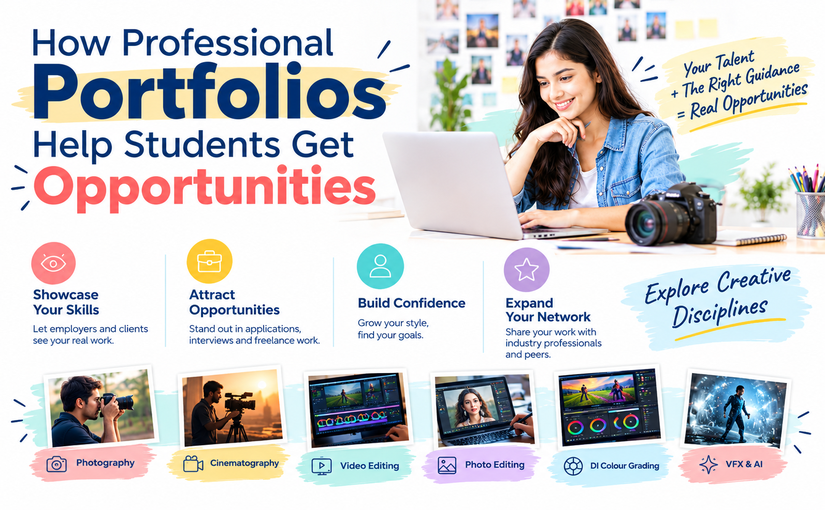
A strong portfolio is essential for securing jobs or freelance work. Throughout the course, students build a professional showreel showcasing their editing skills across different types of projects.
This portfolio becomes a valuable asset during interviews and client presentations.
Career Guidance
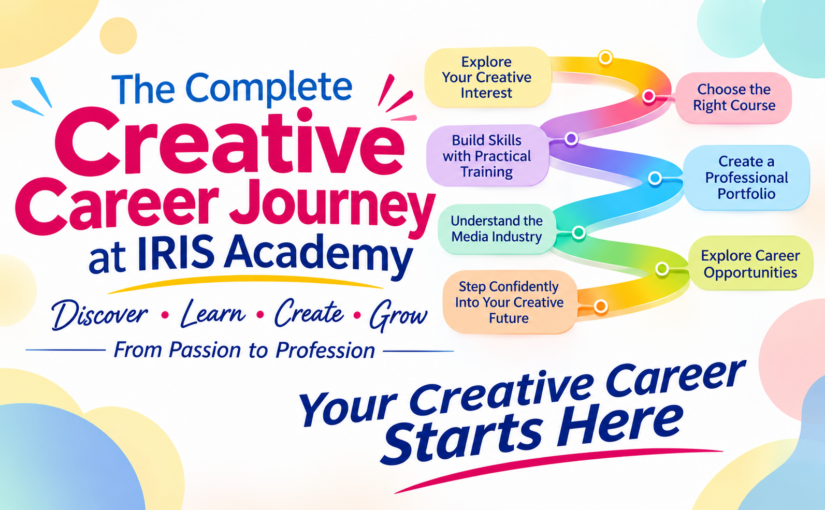
IRIS Academy supports students beyond classroom learning by helping them understand industry expectations, improve interview readiness, strengthen their portfolios, and explore career opportunities in production houses, media companies, digital agencies, television, and independent content creation.
Who Should Join a Video Editing Course?
A video editing course is suitable for:
- Students after Higher Secondary
- College students
- Aspiring filmmakers
- Photographers
- YouTubers
- Content creators
- Freelancers
- Social media managers
- Marketing professionals
- Professionals looking for a creative career change
No prior editing experience is required to begin learning.
Why Choose Video Editing as a Career?
Video editing offers an exciting combination of creativity, technology, and career flexibility. As businesses, creators, filmmakers, and brands continue to invest in video content, skilled editors will remain in high demand.
With the right training, practical experience, and portfolio, you can build a rewarding career in film production, television, OTT platforms, advertising, digital marketing, or freelance content creation.
At IRIS Academy, students receive industry-oriented training designed to bridge the gap between learning and professional practice. Through hands-on projects, portfolio development, mentorship, and career guidance, aspiring editors gain the confidence and practical skills needed to pursue opportunities in today’s rapidly growing media and entertainment industry.